

How to Choose an ESG Consultant Without Getting Greenwashed
The ESG consulting market exploded from $1.2 billion in 2020 to over $3.8 billion in 2024, creating massive opportunities for both legitimate experts...
9 min read
The carbon credit market has exploded from $1 billion in 2021 to over $2 billion in 2024, creating unprecedented opportunities for businesses to offset their environmental impact while potentially generating returns. However, this rapid growth has also attracted sophisticated scammers who prey on well-intentioned entrepreneurs eager to go green. Understanding how to navigate this complex market legally and safely isn't just about environmental responsibility—it's about protecting your business from costly fraud.

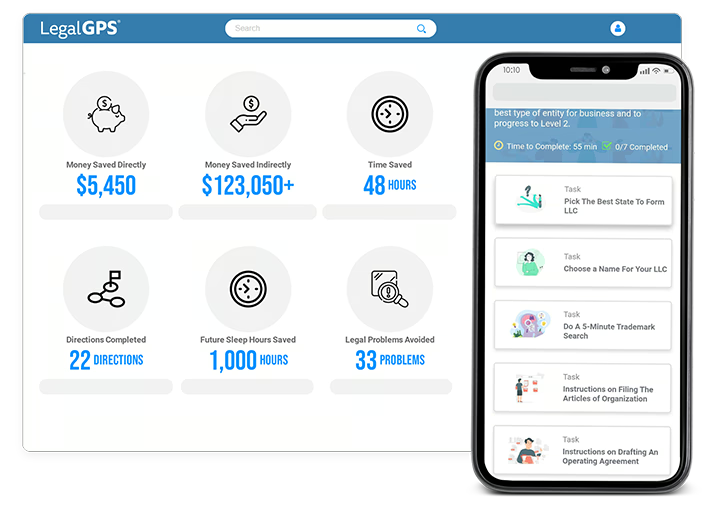
Legal GPS Pro
Protect your business with our complete legal subscription service, designed by top startup attorneys.
A carbon credit represents one metric ton of carbon dioxide removed from or prevented from entering the atmosphere. When your manufacturing company purchases credits from a reforestation project in Brazil, you're essentially buying proof that trees equivalent to your emissions have been planted and verified. The transaction seems straightforward, but the legal and verification complexities run much deeper.
Carbon credits operate through various mechanisms including forestry projects, renewable energy installations, methane capture operations, and direct air capture technology. Each credit should come with detailed documentation proving the environmental benefit actually occurred, wasn't counted elsewhere, and will provide permanent or long-term carbon storage.
The market operates primarily through voluntary transactions where businesses purchase credits to meet sustainability goals, offset unavoidable emissions, or demonstrate environmental leadership to customers and investors. Unlike compliance markets with strict government oversight, voluntary carbon markets rely heavily on third-party verification and buyer due diligence.

Carbon Offset Trading Agreement for environmental credit verification and compliance.
Trusted by 1,000+ businesses to safeguard their LLCs.
Modern consumers increasingly choose brands based on environmental values, with 73% of millennials willing to pay more for sustainable products according to recent studies. This consumer pressure creates real financial incentives for businesses to demonstrate genuine environmental commitment through verified carbon offset purchases.
Beyond marketing benefits, carbon credits offer potential tax advantages when structured properly and documented correctly. Companies can often deduct legitimate offset purchases as business expenses while building valuable sustainability narratives for investors, customers, and regulatory compliance.
Forward-thinking entrepreneurs also view high-quality carbon credits as investment opportunities, purchasing credits that may appreciate as carbon pricing mechanisms expand globally. However, this investment potential makes the market particularly attractive to scammers who exploit buyers' dual motivations of environmental impact and financial returns.
The voluntary carbon market's lack of standardized oversight creates perfect conditions for sophisticated fraud schemes. Unlike traditional securities markets with clear regulatory frameworks, carbon credit transactions often occur through private agreements with minimal third-party verification requirements.
Scammers exploit this regulatory gap by creating elaborate schemes involving fake forestry projects, exaggerated emission reduction claims, and fabricated verification documents. These fraudulent operations can cost businesses hundreds of thousands of dollars while providing zero environmental benefit and potential legal liability.
The complexity of carbon science also works in scammers' favor, as many business owners lack the technical expertise to evaluate project validity independently. This knowledge gap allows fraudulent sellers to use scientific-sounding language and impressive documentation to mask worthless or non-existent projects.
In 2023, GreenEarth Solutions sold carbon credits worth $2.3 million to 47 different companies, claiming credits came from a massive reforestation project in Guatemala covering 50,000 acres. The company provided beautiful drone footage, detailed planting schedules, and impressive scientific reports showing projected carbon sequestration over 30 years.
TechFlow Manufacturing, one of the buyers, purchased $85,000 worth of credits to offset their annual emissions and prominently featured the partnership in their sustainability report. When environmental journalists investigated the Guatemala project six months later, they discovered the "forest" was actually agricultural land with no tree planting activity whatsoever.
The investigation revealed that GreenEarth had fabricated all documentation, used stock drone footage from legitimate forestry operations, and created fake scientific reports with stolen researcher credentials. TechFlow not only lost their $85,000 investment but faced customer backlash and had to retract their sustainability claims, damaging their brand reputation significantly.
Double-counting represents one of the most prevalent scam techniques, where sellers sell the same carbon reduction to multiple buyers. A wind farm project might legitimately reduce 10,000 tons of CO2 annually, but unscrupulous brokers sell 50,000 tons worth of credits by fabricating additional projects or inflating actual reductions.
Additionality fraud occurs when scammers sell credits for projects that would have happened anyway without carbon credit funding. These schemes often involve existing renewable energy installations or conservation projects already receiving government subsidies, making the carbon credits worthless since no additional environmental benefit occurs.
Phantom project scams involve completely fabricated offset projects backed by sophisticated but fake documentation. Scammers create entire fictional project histories, including false satellite imagery, fabricated monitoring reports, and fake third-party verification certificates that appear legitimate to untrained buyers.
Legitimate carbon credits from verified projects typically cost between $15-50 per ton, depending on project type, verification standards, and additional environmental benefits. When sellers offer credits for under $5 per ton or promise bulk discounts that seem unusually generous, these pricing anomalies often indicate fraudulent schemes.
Scammers frequently use aggressive pricing to create urgency and prevent thorough due diligence. They may claim limited-time offers or exclusive access to premium credits at discount prices, pressuring buyers to commit quickly before verifying project legitimacy.
Legitimate carbon credit projects provide extensive documentation including project design documents, monitoring plans, verification reports, and satellite imagery showing actual project implementation. Sellers who provide only marketing materials, stock photos, or refuse to share detailed technical documentation should raise immediate red flags.
Professional carbon credit developers maintain transparent project registries with publicly available information about project locations, methodologies, and verification histories. Any seller unwilling to provide registry numbers, verifier contact information, or detailed project coordinates likely operates a fraudulent scheme.
Before purchasing any carbon credits, demand to see the project's registry entry on recognized platforms like Verra, Gold Standard, or Climate Action Reserve. These registries maintain detailed project information, verification reports, and credit issuance records that legitimate sellers readily provide to potential buyers.
Always verify the seller's claims by contacting the third-party verifier directly and requesting confirmation of their involvement in the project. Legitimate verifiers maintain professional reputations and willingly discuss their verification process, while scammers often provide fake verifier contact information or impersonate real verification firms.
Conduct independent research on project locations using satellite imagery from Google Earth or other mapping services to confirm that claimed activities are actually occurring on the ground. This simple verification step helps identify phantom projects or exaggerated claims about project scale and implementation.
The Verified Carbon Standard (VCS) managed by Verra represents the world's most widely used voluntary greenhouse gas program, with rigorous methodology requirements and transparent project registration. Credits verified under VCS carry unique serial numbers that allow buyers to track ownership and retirement status through public databases.
The Gold Standard focuses on projects that provide additional sustainable development benefits beyond carbon reduction, such as biodiversity conservation or community economic development. Projects meeting Gold Standard requirements undergo enhanced verification processes and provide buyers with additional social and environmental impact assurance.
Climate Action Reserve operates primarily in North America with stringent protocols for specific project types including forestry, livestock, and urban forestry projects. Their verification requirements include site visits, financial additionality tests, and ongoing monitoring requirements that provide strong fraud protection for buyers.
Proper contract structure provides essential protection against carbon credit fraud and ensures buyers receive the environmental benefits they pay for. Effective contracts include specific project identification, verification requirements, seller warranties, and clear remedies for non-performance or fraudulent activity.
Purchase agreements should explicitly define the carbon credits being sold, including project registry numbers, vintage years, and verification standards applied. This specificity prevents sellers from substituting inferior credits or claiming that vague project descriptions satisfy contract requirements.
TechStart Inc., a software development company, structured their carbon credit purchase agreement with multiple protection layers after consulting with legal counsel specializing in environmental transactions. Their $125,000 purchase of forestry credits included escrow arrangements, verification requirements, and specific performance guarantees.
The contract required the seller to deposit all project documentation into escrow before payment release and provided TechStart with 90 days to conduct independent verification of project claims. When third-party verification revealed significant discrepancies in tree survival rates, TechStart recovered 70% of their purchase price through the escrow mechanism.
Additionally, TechStart's contract included seller warranties that all credits represented additional, permanent, and verified carbon reductions not sold to other buyers. These warranties created legal liability for the seller if any credits proved invalid, providing ongoing protection even after transaction completion.
Delivery and retirement clauses ensure that purchased credits are properly transferred to buyer accounts and immediately retired to prevent double-selling. These provisions should specify the exact registry where credits will be delivered and require retirement within specific timeframes to protect buyer interests.
Warranty and representation sections require sellers to guarantee credit authenticity, additionality, permanence, and freedom from prior encumbrances. Strong warranty language creates legal liability for sellers who misrepresent credit quality and provides buyers with clear legal remedies for fraudulent transactions.
Indemnification provisions protect buyers from third-party claims related to project implementation, land rights disputes, or regulatory violations. These clauses transfer potential legal risks to sellers who should bear responsibility for proper project development and compliance with applicable environmental regulations.
Establish direct relationships with major carbon credit registries rather than relying solely on intermediary sellers who may add unnecessary costs and complexity to transactions. Registry officials can provide guidance on high-quality projects, explain verification processes, and help buyers understand the technical aspects of different credit types.
Many registries offer buyer protection programs or maintain lists of approved project developers with proven track records of successful project implementation and verification. These resources help buyers identify trustworthy partners and avoid the most common fraud schemes targeting inexperienced purchasers.
Consider joining industry organizations like the International Carbon Reduction and Offset Alliance (ICROA) or the Carbon Credit Quality Initiative, which provide educational resources, best practice guidance, and networking opportunities with other serious buyers committed to market integrity.
The International Organization for Standardization (ISO) 14064 standard provides the framework for quantifying, monitoring, and reporting greenhouse gas emissions and reductions. Projects following ISO 14064 protocols undergo rigorous verification by accredited third parties and provide buyers with internationally recognized quality assurance.
The Partnership for Market Readiness, supported by the World Bank, develops high-quality carbon pricing instruments and provides technical guidance for carbon market participants. Their resources help buyers understand market best practices and identify projects meeting international quality standards.
Regional standards like the California Air Resources Board protocols or the European Union Emissions Trading System provide additional quality benchmarks for projects developed in specific jurisdictions with strong regulatory oversight and enforcement mechanisms.
Eco-Minded Retail Co., a sustainable clothing manufacturer, wanted to achieve carbon neutrality for their 2023 operations and purchased $45,000 worth of carbon credits from what appeared to be a legitimate methane capture project at dairy farms in Wisconsin. The seller provided impressive documentation including EPA registration numbers, university research partnerships, and detailed engineering reports.
The project claimed to capture methane from 200 dairy operations and convert it to renewable energy, reducing atmospheric greenhouse gases while generating clean electricity. Eco-Minded's leadership was particularly attracted to the project's additional environmental benefits and the seller's claims about supporting family farms through additional revenue streams.
When Eco-Minded's sustainability consultant conducted a routine verification check six months after purchase, they discovered that only 15 of the claimed 200 farms actually participated in methane capture, and most of those installations had been operational for years before the carbon credit sales began. The credits had no additionality and provided no real environmental benefit.
Eco-Minded's primary mistake was accepting the seller's documentation without independent verification through registry systems or third-party confirmation. They also failed to conduct site visits or request real-time monitoring data that would have revealed the project's actual scope and operational status.
The company also overlooked red flags in the seller's aggressive timeline promises and unusually low pricing compared to other methane capture projects. These warning signs should have triggered additional due diligence before committing such a substantial investment.
To avoid similar losses, buyers should always verify project claims through multiple independent sources, insist on recent monitoring reports with specific performance data, and require sellers to provide verifiable contact information for project operators and local regulatory authorities.
The Internal Revenue Service requires specific documentation to support business expense deductions for carbon credit purchases, including detailed receipts, project identification, and proof of retirement for offset purposes. Without proper documentation, businesses risk losing tax benefits and facing potential audit penalties.
Maintain comprehensive records including purchase agreements, registry retirement certificates, third-party verification reports, and correspondence with project developers. This documentation package supports both tax compliance and potential future legal proceedings if credit quality issues arise.
Consider working with tax professionals familiar with environmental credit transactions who can ensure proper documentation and help structure purchases to maximize legitimate tax benefits while avoiding potential compliance issues with evolving regulations.
Establish a systematic documentation process that tracks every aspect of your carbon credit transactions from initial evaluation through final retirement. This audit trail should include due diligence research, seller communications, contract negotiations, payment records, and post-purchase monitoring activities.
Implement regular monitoring procedures that verify ongoing project performance and maintain updated documentation about project status. Many carbon credit fraud schemes collapse over time, and continuous monitoring helps identify problems early enough to pursue legal remedies or insurance claims.
Consider purchasing carbon credit insurance or working with specialized brokers who provide buyer protection guarantees. These additional protections may justify slightly higher transaction costs while providing valuable financial protection against sophisticated fraud schemes.
Large carbon credit purchases exceeding $50,000 justify professional legal review to ensure proper contract protection and regulatory compliance. Environmental law specialists understand the nuances of carbon credit transactions and can identify potential legal risks that general business attorneys might overlook.
International carbon credit transactions require additional legal expertise regarding cross-border contracts, currency hedging, and foreign investment regulations. These complex deals often involve multiple jurisdictions and regulatory frameworks that create significant legal risks without proper professional guidance.
Consider legal consultation when developing comprehensive carbon strategies that involve multiple suppliers, long-term contracts, or integration with other environmental initiatives. Professional guidance helps ensure consistent legal protection across all transactions while building sustainable procurement processes.
Legal GPS Pro provides specialized contract templates for carbon credit purchases that include essential warranty protections, verification requirements, and fraud prevention clauses developed specifically for the voluntary carbon market. These templates save time and money while providing professional-level legal protection for businesses of all sizes.
Don't let greenwashing scams derail your sustainability goals or cost your business thousands in fraudulent transactions. Understanding the legal landscape of carbon credit trading protects both your investment and your environmental commitments while building a foundation for long-term business success.
Legal GPS Pro
Protect your business with our complete legal subscription service, designed by top startup attorneys.
|
Premium Template
Single-use Template |
Legal GPS Pro
Unlimited Access, Best Value |
|
|
| Choose Template | Learn More |
| Trusted by 1000+ businesses | |

The ESG consulting market exploded from $1.2 billion in 2020 to over $3.8 billion in 2024, creating massive opportunities for both legitimate experts...