

Business Lending Gone Wrong: How to Secure Your Investment Properly
Every year, thousands of well-intentioned entrepreneurs lose their life savings by making informal business loans that go catastrophically wrong....
9 min read
Lending money to friends and family seems like a natural way to help the people you care about most. But without proper legal protection, these well-intentioned loans can quickly transform into relationship-ending disasters that leave everyone hurt, angry, and financially damaged.

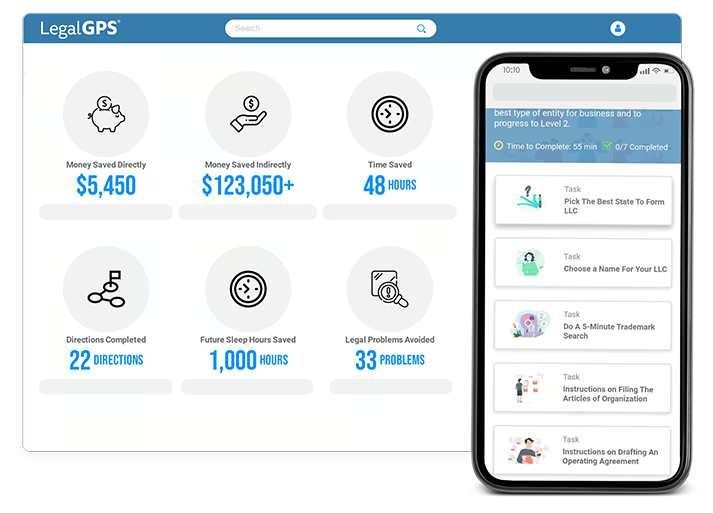
Legal GPS Pro
Protect your business with our complete legal subscription service, designed by top startup attorneys.
The statistics tell a sobering story. According to financial experts, nearly 40% of personal loans between family members result in damaged relationships, and less than 50% are ever fully repaid. Even worse, most people who lend money to loved ones do so without any written agreement, leaving themselves legally vulnerable and emotionally exposed.
The good news is that you can help your friends and family financially while protecting both your money and your relationships. The key lies in treating these transactions with the same professional care you'd give to any other significant financial decision.
When your brother needs $5,000 to avoid foreclosure or your best friend asks for help with medical bills, your first instinct is probably to help immediately. This emotional response, while admirable, often leads people to skip the legal protections that could save both the money and the relationship.
Informal lending arrangements create a perfect storm of problems. Without clear terms, both parties operate under different assumptions about interest rates, payment schedules, and consequences for late payments. The lender often expects regular updates and adherence to their unstated expectations, while the borrower may view the money as a low-priority obligation.
The emotional dynamics make everything worse. Family gatherings become awkward when payments are late. Friendships strain under the weight of unspoken financial pressure. The borrower may feel controlled or judged, while the lender feels taken advantage of and disrespected.
Most damaging of all, these informal arrangements offer virtually no legal protection. If the relationship deteriorates and payments stop, you'll have little recourse beyond small claims court, where your chances of success depend entirely on whatever minimal documentation you might have.
Sarah learned this lesson the hard way when she lent her sister Jennifer $15,000 for a down payment on a house. The arrangement was simple: Jennifer would pay back $400 per month until the loan was repaid, with no interest charged because "family doesn't charge family."
For the first eight months, Jennifer made regular payments. Then she lost her job and payments became sporadic. When Sarah asked about the missed payments, Jennifer became defensive, claiming Sarah was being "controlling" and "acting like a bank instead of a sister."
The situation deteriorated rapidly. Jennifer stopped taking Sarah's calls and avoided family gatherings. When Jennifer did attend family events, she complained to relatives that Sarah was "harassing" her about money. After two years of irregular payments totaling just $4,200, Jennifer declared the remaining balance "forgiven" because she'd helped Sarah with babysitting over the years.
Sarah had no written agreement, no documented payment history, and no legal recourse. She lost $10,800 and her relationship with her sister. The family still hasn't fully recovered from the tension and divided loyalties the situation created.
Never agree to lend money during the initial conversation. Instead, tell your friend or family member that you need 48 hours to review your finances and consider their request. This cooling-off period prevents emotional decisions and gives you time to research proper loan documentation. Use this time to determine whether you can afford to lose the money entirely, research appropriate interest rates, and decide what terms would work for both parties.
Not every request for financial help should result in a loan. Before agreeing to lend money, evaluate both the borrower's situation and your own financial stability. The best lending opportunities involve borrowers who have temporary cash flow problems but strong long-term financial prospects.
Good candidates for personal loans include family members or friends who have steady employment, a history of meeting financial obligations, and a clear plan for repayment. They should be able to explain exactly why they need the money, how they plan to pay it back, and what they'll do if their repayment plan doesn't work as expected.
Red flags include vague explanations about why the money is needed, unrealistic repayment timelines, or a history of financial irresponsibility. Be especially cautious about lending money for gambling debts, drug treatment, or get-rich-quick schemes. These situations often involve deeper problems that money alone won't solve.
Consider your own financial situation carefully. Never lend money you can't afford to lose entirely. If losing this money would impact your own financial stability, retirement savings, or emergency fund, the answer should be no regardless of who's asking.

Secured Promissory Note with principal, interest, repayment schedule, and collateral details.
Trusted by 1,000+ businesses to safeguard their LLCs.
Every personal loan, regardless of the amount or the relationship between the parties, should be documented in a written agreement. This document protects both the lender and borrower by establishing clear expectations and providing legal recourse if problems arise.
The loan agreement should specify the principal amount, interest rate, payment schedule, and maturity date. Include provisions for late payments, default consequences, and early repayment options. Both parties should sign the document, and each should keep an original copy.
Don't forget practical details that can cause problems later. Specify where payments should be sent, whether partial payments are acceptable, and what constitutes default. Include a clause addressing what happens if the borrower dies or becomes incapacitated before the loan is repaid.
Consider requiring collateral for larger loans. This doesn't mean you're planning to repossess your nephew's car, but having security gives you legal options and encourages the borrower to prioritize repayment.
Mike's cousin David needed $25,000 to expand his successful landscaping business. Instead of agreeing immediately, Mike insisted on seeing David's business plan, tax returns, and proposed repayment schedule. They agreed on a 5% annual interest rate and monthly payments of $450 over five years.
Mike used a Legal GPS loan agreement template to document the arrangement, including a provision that gave him a security interest in David's landscaping equipment. They also agreed that David would provide quarterly updates on his business performance.
The formal approach worked perfectly. David appreciated having clear expectations and made every payment on time. The quarterly updates helped Mike understand David's business better and led to additional business referrals. Five years later, the loan was fully repaid with interest, and their family relationship was stronger than ever.
When Emma's daughter needed $18,000 to cover unexpected wedding expenses, Emma could have simply written a check. Instead, she structured it as a formal loan with 3% annual interest and monthly payments of $320 over five years.
The written agreement included a provision allowing the daughter to pay extra toward principal without penalty and specified that any missed payment would trigger a family meeting to discuss revised terms. Emma also included a clause forgiving the remaining balance if her daughter maintained perfect payment history for the first three years.
This structure gave the daughter ownership of her debt while providing Emma with legal protection. The modest interest rate ensured the loan made financial sense for Emma while remaining affordable for her daughter. Two years in, the daughter is ahead of schedule on payments and proud of her financial responsibility.
Determining appropriate interest rates for family loans requires balancing several considerations. The rate should be high enough to compensate you for the risk and opportunity cost of lending your money, but low enough to provide genuine help to the borrower.
Start by researching current market rates for personal loans and credit cards. Your family member is probably asking for help because they can't qualify for traditional financing, so your rate should be lower than what they'd pay elsewhere. However, charging no interest at all can create tax complications and may not be sustainable for larger loans.
The IRS publishes applicable federal rates (AFRs) each month, which represent the minimum interest rates you can charge on family loans without creating tax consequences. For 2024, these rates range from about 4% to 5% depending on the loan term. Charging below the AFR may require you to pay gift taxes on the forgiven interest.
Structure repayment terms to match the borrower's cash flow and the purpose of the loan. Emergency loans might require repayment within 12-18 months, while business or home improvement loans could extend over three to seven years. Avoid balloon payments or other complex structures that might create problems later.
The IRS distinguishes between loans and gifts based on several factors, including whether you charge market-rate interest, document the loan properly, and make genuine efforts to collect payments. If you want to ensure your transaction is treated as a loan for tax purposes, charge at least the applicable federal rate, create written documentation, and maintain records of all payments. Otherwise, the IRS might reclassify your loan as a gift, which could trigger gift tax consequences if the amount exceeds annual exclusion limits.
Documentation serves two critical purposes in family lending: it clarifies expectations at the beginning of the relationship and provides legal protection if things go wrong. Even the most trusting family relationships benefit from written agreements that eliminate ambiguity and misunderstandings.
Start with a comprehensive promissory note that includes all essential terms. This document should be signed by both parties and notarized if state law requires it. Keep detailed records of all payments, including dates, amounts, and payment methods. Consider requiring the borrower to provide periodic financial updates, especially for larger loans or longer terms.
For significant loans, consider additional protections like personal guarantees from the borrower's spouse or security interests in specific assets. These provisions might seem excessive for family loans, but they provide important legal rights and encourage the borrower to prioritize repayment.
Don't overlook practical considerations that can prevent problems. Establish a clear payment method and due date. Decide whether you'll accept partial payments and how they'll be applied to principal and interest. Include provisions for modifying terms if circumstances change, but require written agreement for any modifications.
Tom lent his brother-in-law $12,000 to buy a used car with a handshake agreement for repayment "when things get better." Six months later, his brother-in-law lost his job and stopped making payments entirely. When Tom suggested selling the car to repay the loan, he discovered that the title was in someone else's name and his brother-in-law had already borrowed against the vehicle elsewhere.
Without a written agreement or security interest, Tom had no legal recourse. He couldn't claim ownership of the car, garnish wages, or even prove that the money was a loan rather than a gift. After consulting with an attorney, Tom realized that pursuing collection would cost more than the outstanding balance and likely destroy his marriage relationship with his wife's family.
Tom eventually wrote off the entire $12,000 as a painful lesson about the importance of proper documentation. His relationship with his brother-in-law never recovered, and family gatherings remain tense three years later.
Even well-documented loans can encounter repayment problems. Economic downturns, job losses, health emergencies, and other life events can disrupt the best repayment plans. How you handle these situations determines whether you'll preserve both your money and your relationships.
Start with communication rather than legal threats. Contact the borrower as soon as payments become late to understand what's happening and explore solutions. Many payment problems are temporary and can be resolved with modified terms or temporary forbearance.
Consider offering formal loan modifications if the borrower's situation has changed permanently. You might extend the loan term, reduce monthly payments, or temporarily lower the interest rate. Document any modifications in writing and ensure both parties understand the new terms.
If communication fails and the borrower becomes unresponsive, you may need to pursue legal collection. Start with demand letters and formal notices before considering litigation. Remember that legal action will likely end the personal relationship permanently.
When loan payments become problematic, consider calling a family meeting that includes other trusted relatives or family friends. This approach can provide emotional support for both parties while creating social pressure for the borrower to honor their obligations. Have a neutral family member facilitate the discussion and focus on finding solutions rather than assigning blame. Often, other family members can provide additional support, co-sign modified terms, or help develop realistic repayment plans that work for everyone involved.
Lending money isn't the only way to help friends and family in financial distress. Sometimes alternative approaches better serve everyone's long-term interests while avoiding the complications that formal lending creates.
Consider making an outright gift if you can afford it and the amount isn't too large. Gifts eliminate repayment pressure and avoid the ongoing tension that loan relationships can create. You can give up to $18,000 per year to any individual without triggering gift tax reporting requirements.
Another option is to co-sign for a traditional loan from a bank or credit union. This approach provides your friend or family member with better interest rates and professional loan servicing while giving you legal protections that personal loans might lack. However, understand that co-signing makes you fully liable for the debt if the primary borrower defaults.
For business-related requests, consider becoming an investor rather than a lender. This approach aligns your interests with the borrower's success while providing potential upside that loans cannot offer. Structure investment arrangements carefully and consider consulting with a business attorney to ensure proper documentation.
When Julia's nephew asked for $8,000 to finish his college degree, she decided to make it a gift rather than a loan. However, she attached conditions that protected her interests while supporting his success. She agreed to pay the money directly to the college in two installments, with the second payment contingent on maintaining good academic standing.
This arrangement eliminated the complexity of loan documentation while ensuring the money served its intended purpose. Her nephew appreciated not having debt hanging over his head during his final year of school, and Julia felt confident that her money was being used responsibly. The approach strengthened their relationship rather than creating ongoing financial obligations.
Lending money to friends and family doesn't have to be a relationship-ending disaster. With proper documentation, realistic terms, and clear communication, these arrangements can provide meaningful help while protecting both parties' interests.
The key is treating family loans with the same professionalism you'd bring to any other significant financial transaction. Use written agreements, charge appropriate interest rates, and maintain detailed records. Don't let emotional relationships override sound financial judgment.
Remember that the goal isn't just protecting your money—it's preserving relationships that matter more than any financial consideration. A well-structured loan with clear expectations and proper documentation gives both parties the best chance of maintaining their personal relationship while achieving their financial objectives.
When you're ready to create proper documentation for a family loan, Legal GPS offers comprehensive personal loan agreement templates that protect both lenders and borrowers. Our Pro subscription includes access to attorney-reviewed forms, step-by-step guidance, and ongoing legal support to ensure your family lending arrangements are legally sound and relationship-friendly.
Legal GPS Pro
Protect your business with our complete legal subscription service, designed by top startup attorneys.
|
Premium Template
Single-use Template |
Legal GPS Pro
Unlimited Access, Best Value |
|
|
| Choose Template | Learn More |
| Trusted by 1000+ businesses | |

Every year, thousands of well-intentioned entrepreneurs lose their life savings by making informal business loans that go catastrophically wrong....

Paying off a loan should be simple: request a final balance, make the payment, and move on. But in reality, many borrowers face unexpected fees,...

Paying off a loan can be a daunting and sometimes confusing task, especially if you're an entrepreneur looking to settle a debt. That's where a...