

Dog Walking and Pet Sitting: How to Choose Services That Won't Break Your Heart
Running a business while caring for a beloved pet creates unique challenges that many entrepreneurs face daily. The solution often involves hiring...
10 min read
House sitting seems like the perfect arrangement. Homeowners get peace of mind while traveling, and house sitters enjoy free accommodations in exchange for basic property care. Both parties save money and feel they're helping each other out.

Legal GPS Pro
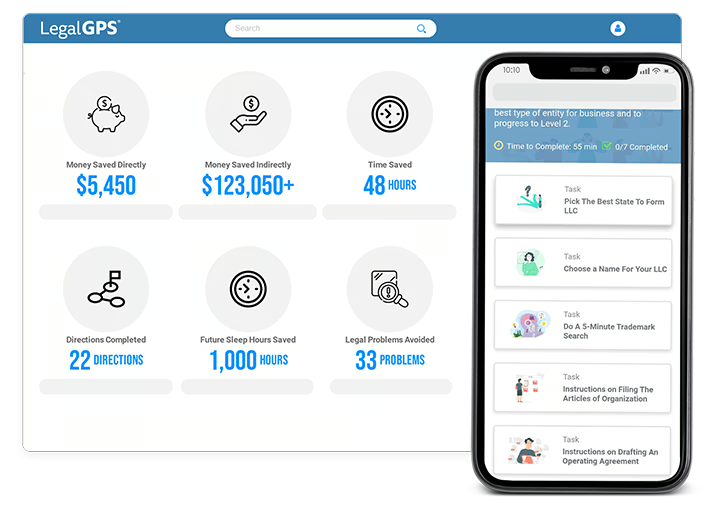
Protect your business with our complete legal subscription service, designed by top startup attorneys.
But without the right agreements in place, house sitting can quickly turn from a helpful arrangement into a legal and financial disaster. Every year, thousands of homeowners and house sitters find themselves in disputes over property damage, emergency decisions, pet care, and liability issues that cost tens of thousands of dollars to resolve.
The problem isn't that people have bad intentions. Most house sitting disasters happen because well-meaning people simply never discussed crucial details before the arrangement began. A handshake agreement and verbal understanding about "taking care of things" isn't enough to protect either party when serious problems arise.
This guide will walk you through the essential agreements every homeowner and house sitter must have in writing before anyone hands over the keys. By addressing these critical areas upfront, you'll prevent the most common house sitting disasters and protect yourself from costly legal battles.
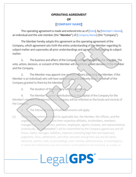
House Sitting Agreement outlining duties, schedules, payments, and property care.
Trusted by 1,000+ businesses to safeguard their LLCs.
The biggest source of house sitting disputes involves property damage and who bears financial responsibility when accidents happen. Without clear agreements, both parties can end up fighting over insurance claims, repair costs, and liability coverage that leaves everyone financially exposed.
Most homeowners assume their insurance will cover any damage that occurs while they're away. Most house sitters assume they're only responsible for damage they directly and negligently cause. Both assumptions are often wrong, creating a perfect storm for expensive disputes when accidents inevitably occur.
Sarah agreed to house sit for the Henderson family during their month-long European vacation. Three weeks into the stay, she discovered water flooding the basement after the washing machine hose burst while she was at work. By the time she found the damage, water had destroyed the finished basement, ruined stored furniture, and caused extensive mold damage.
The Hendersons' insurance company initially denied the claim, stating the washing machine hadn't been properly maintained. They demanded Sarah's renter's insurance cover the damage since she was the "tenant" at the time. Sarah's insurance countered that she wasn't a tenant but a house sitter, and the damage resulted from pre-existing maintenance issues, not her negligence.
After six months of legal battles, Sarah ended up paying $15,000 toward repairs, the Hendersons covered $30,000 through their insurance, and both parties spent thousands more on legal fees. A written agreement defining liability, insurance responsibilities, and maintenance expectations could have prevented this entire disaster.
Property damage agreements must clearly define what constitutes normal wear and tear versus damage requiring compensation. They should specify which party's insurance responds first to different types of claims and establish protocols for documenting and reporting any damage immediately when it's discovered.
Before any house sitting arrangement begins, both parties should complete this insurance verification process. First, homeowners must confirm with their insurance carrier that the policy covers incidents occurring during house sitting arrangements and understand any limitations or additional requirements.
House sitters should verify their renter's or personal liability insurance covers activities while house sitting, not just their primary residence. Many policies exclude coverage for house sitting unless specifically endorsed. Both parties should exchange insurance company contact information and policy numbers, and document the pre-arrangement condition of the property with photos and written notes.
Consider requiring house sitters to add the homeowner as an additional insured party on their liability policy for the duration of the stay. This simple step can prevent many coverage disputes and provides clearer liability protection for both parties.
House sitting emergencies test the limits of verbal agreements faster than any other scenario. When pipes burst at midnight, pets need emergency veterinary care, or security systems malfunction, house sitters need clear authority to make immediate decisions without waiting for homeowner approval.
The challenge lies in balancing the house sitter's need for decision-making authority with the homeowner's desire to control major decisions about their property. Without written emergency protocols, house sitters either make unauthorized decisions that anger homeowners or wait for approval while damage worsens and costs multiply.
Emergency agreements must address both financial authorization limits and communication requirements. House sitters need to know exactly how much they can spend without approval and when they must attempt to contact homeowners before taking action.
Mike was house sitting for the Rodriguez family when their main water line burst at 2 AM on a Friday night. Water was flooding the front yard and threatening the foundation. The emergency plumber quoted $1,200 for immediate repairs but warned that waiting until Monday could result in foundation damage costing $15,000 or more.
Mike had no emergency contact protocol and no spending authorization. He couldn't reach the Rodriguez family, who were on a cruise with limited cell service. Afraid to authorize expensive repairs without permission, he shut off the main water and waited for morning.
By Saturday afternoon, the continued leak had undermined part of the foundation, ultimately costing $23,000 in repairs. The Rodriguez family blamed Mike for not acting immediately, while Mike argued he was protecting their interests by not authorizing unauthorized expenses. Their friendship was destroyed, and both parties faced legal action over who should pay for the additional damage.
A written emergency protocol could have prevented this disaster by giving Mike clear authority to spend up to $2,000 on emergency repairs and requiring him to document decisions with photos and contractor estimates for homeowner review.
Security arrangements often receive minimal attention during house sitting discussions, but they're among the most important agreements to establish in writing. Both parties need protection from security breaches, unauthorized access, and liability for crimes or accidents involving third parties.
House sitters need secure access to the property and clear guidelines about who else may visit. Homeowners need assurance that their property remains secure and that access codes or keys won't be shared inappropriately. Security agreements must balance hospitality with protection.
The rise of smart home technology has created new complications around digital security, app access, and monitoring systems that many house sitting arrangements fail to address adequately.
Jennifer was house sitting for Tom when she decided to have her sister visit for a weekend. Tom had mentioned the house was sometimes used for Airbnb, and Jennifer assumed this meant guests were generally welcome. She gave her sister the access code to come and go freely during the visit.
Unfortunately, Tom had forgotten to mention that he'd rented the house to different Airbnb guests the following week. When those guests arrived and found Jennifer's sister still there with full access to the property, they assumed a break-in was occurring and called police.
The misunderstanding escalated when Jennifer's sister couldn't immediately prove her authorization to be there. Police responded to a reported burglary in progress, and the confusion resulted in property damage, false alarm fees, and the Airbnb guests demanding refunds and compensation for their traumatic experience.
Tom's Airbnb insurance was voided because Jennifer wasn't an authorized host, and his homeowner's policy excluded coverage for commercial rental activities. Jennifer faced personal liability for the incident, ultimately paying $8,000 in damages and legal fees, while Tom lost $4,000 in Airbnb refunds and faced suspension from the platform.
Clear guest policies, access management protocols, and coordination with any existing rental arrangements could have prevented this expensive misunderstanding entirely.
Modern house sitting arrangements require digital security protocols that go far beyond traditional key management. Start by creating unique, temporary access codes for house sitters that can be easily changed when the arrangement ends. Document all smart home device passwords, app access requirements, and monitoring system protocols.
Establish clear policies about social media posting, video doorbell notifications, and security camera access. Many homeowners want to monitor their property but also respect house sitter privacy, requiring careful balance in surveillance agreements.
Consider using lockbox systems or smart locks instead of copying keys, and always change access codes immediately when house sitting arrangements conclude. Provide house sitters with written emergency contact information for security companies, and ensure they understand how to arm and disarm all security systems properly.
Pet care represents one of the most emotionally charged areas of house sitting agreements. Beloved pets require more than basic feeding and care, and disagreements about veterinary decisions, exercise routines, and emergency medical treatment can destroy relationships and create significant financial liability.
Many pet owners provide minimal instructions about their animals' needs, assuming house sitters will use common sense and contact them with any questions. This approach fails catastrophically when pets become ill, injured, or exhibit behavioral problems requiring immediate intervention.
Comprehensive pet care agreements must address routine care requirements, emergency veterinary authorization, and end-of-life decision-making authority for elderly or ill animals.
Karen agreed to house sit and care for the Wilson family's 12-year-old golden retriever, Buddy, during their two-week vacation. The Wilsons mentioned that Buddy was "getting older but generally healthy" and left emergency veterinary contact information.
On day ten of the house sit, Buddy suddenly became lethargic and refused food. Karen took him to the emergency vet, who discovered a serious intestinal blockage requiring immediate surgery. The surgery would cost $6,000, and without it, Buddy would likely die within hours.
Karen couldn't reach the Wilsons, who were on a safari with no cell service. The veterinary hospital demanded immediate authorization for surgery and payment before proceeding. Karen faced an agonizing decision: authorize expensive surgery without permission or risk Buddy's death while waiting for contact.
Karen authorized the surgery to save Buddy's life. When the Wilsons returned and learned about the $6,000 expense, they were grateful but refused to reimburse Karen, arguing she had exceeded her authority. They claimed they would have made different decisions about end-of-life care for their elderly dog.
Karen sued for reimbursement, the Wilsons counter-sued for unauthorized veterinary expenses, and both parties spent thousands more on legal fees while their friendship was permanently destroyed. Clear veterinary authorization protocols and spending limits could have prevented this heartbreaking dispute.
Utility usage and maintenance responsibilities create frequent disputes between homeowners and house sitters, especially during extended stays. Normal household operations can generate unexpected costs, and routine maintenance issues can escalate into expensive problems without proper protocols.
Many house sitting arrangements fail to address utility cost sharing, maintenance authorization limits, or standards for household upkeep. These omissions often result in surprise bills, damaged relationships, and disputes over who bears responsibility for various expenses.
David house sat for the Thompson family during July and August in Phoenix. The Thompsons mentioned keeping the air conditioning "reasonable" but didn't provide specific temperature guidelines. David, coming from a cooler climate, struggled with the desert heat and kept the house at 68 degrees throughout his six-week stay.
When the electric bill arrived showing an $800 charge compared to the usual $300, the Thompsons demanded David pay the difference. They argued his excessive air conditioning usage was far beyond normal household operations. David countered that he wasn't warned about specific temperature limits and that comfortable living conditions were implied in their agreement.
The dispute escalated when the Thompsons threatened to deduct the excess utility costs from David's security deposit. David had assumed no deposit was required since he was providing free house sitting services. He'd never agreed to any deposit arrangement and argued the Thompsons couldn't retroactively impose financial penalties.
Both parties ended up in small claims court over the $500 difference, spending more on legal fees than the disputed amount. Clear utility usage guidelines and cost-sharing agreements could have prevented this entirely avoidable conflict.
Clear utility agreements should specify acceptable temperature ranges, water usage guidelines, and any cost-sharing arrangements for usage above normal levels. Maintenance protocols should define what issues house sitters can address independently and what requires homeowner approval before taking action.
The best house sitting agreements anticipate that circumstances will change and build flexibility into the arrangement. Include provisions for early termination by either party with appropriate notice periods, and establish protocols for handling unexpected situations like house sitter illness or family emergencies.
Create clear modification procedures that allow both parties to adjust terms when necessary, and document any changes in writing with signatures from both parties. Consider including dispute resolution clauses that require mediation before litigation, potentially saving thousands in legal fees if conflicts arise.
Build payment adjustment mechanisms for arrangements involving compensation, whether for the house sitter's services or for homeowner expenses. These provisions should address how costs are calculated and allocated when stays are shortened or extended unexpectedly.
House sitting arrangements often change due to circumstances beyond anyone's control. Travel plans shift, family emergencies arise, and health issues can force early termination of agreements. Without clear cancellation and modification protocols, these changes often result in financial disputes and damaged relationships.
Many house sitting agreements focus exclusively on normal completion scenarios and fail to address what happens when arrangements must be modified or terminated early. This oversight creates confusion about compensation, replacement care, and ongoing responsibilities when plans change unexpectedly.
Comprehensive agreements should address notice requirements, financial adjustments, and replacement care arrangements for various termination scenarios. Both parties need protection when circumstances require changes to original plans.
Effective house sitting agreements require more than good intentions and verbal understandings. They must create legally enforceable protections that clearly define rights, responsibilities, and remedies when problems arise. The goal isn't to eliminate trust but to supplement it with clear documentation that prevents misunderstandings.
Written agreements should be detailed enough to provide meaningful guidance during emergencies but flexible enough to accommodate reasonable variations in circumstances. They should protect both parties' interests while maintaining the cooperative spirit that makes house sitting arrangements appealing in the first place.
Key documentation requirements include specific property descriptions, detailed care instructions, emergency contact information, insurance coverage verification, and clear dispute resolution procedures. Agreements should be signed by all parties and include effective dates, termination conditions, and modification procedures.
Consider involving attorneys when house sitting arrangements involve valuable properties, exotic pets, or extended durations exceeding 30 days. Professional review can identify potential legal issues and ensure agreements comply with local laws governing residential arrangements.
House sitting disasters are preventable when both parties take time to create comprehensive written agreements addressing the issues covered in this guide. The investment in proper documentation pays dividends by preventing costly disputes and preserving valuable relationships.
For homeowners, your next step is creating detailed property care instructions, verifying insurance coverage for house sitting scenarios, and establishing clear emergency protocols with spending authorization limits. Document your property's condition before departure and ensure house sitters have all necessary contact information and access codes.
House sitters should verify their insurance coverage extends to house sitting activities, understand their authority and limitations clearly, and document property conditions upon arrival. Never accept arrangements with vague verbal agreements, and always insist on written protocols for emergencies, pet care, and property maintenance.
Both parties benefit from using professional agreement templates that address common house sitting scenarios comprehensively. Legal GPS offers specialized house sitting agreement templates designed to prevent the most common disputes while maintaining flexibility for various arrangement types.
Don't wait until problems arise to discover gaps in your house sitting agreements. Take action now to protect yourself with proper documentation and clear expectations. Your future self will thank you for the time invested in creating bulletproof agreements that make house sitting safe and enjoyable for everyone involved.
Ready to protect your house sitting arrangement? Legal GPS Pro subscribers get access to comprehensive house sitting agreement templates, emergency protocol checklists, and step-by-step guidance for creating enforceable agreements that prevent costly disputes. Join Legal GPS Pro today and house sit with confidence knowing you're fully protected.
Legal GPS Pro
Protect your business with our complete legal subscription service, designed by top startup attorneys.
|
Premium Template
Single-use Template |
Legal GPS Pro
Unlimited Access, Best Value |
|
|
| Choose Template | Learn More |
| Trusted by 1000+ businesses | |
Running a business while caring for a beloved pet creates unique challenges that many entrepreneurs face daily. The solution often involves hiring...
The pet care industry has exploded into a $261 billion global market, with millions of families trusting strangers with their beloved animals every...

Choosing elder care services for a loved one ranks among life's most emotionally challenging decisions. The stakes couldn't be higher—your family...