
Annual Trust Accounting Statement Template
As a trustee, you have a fiduciary duty to account to beneficiaries for your management of trust assets. Our annual trust accounting statement template gives you a comprehensive, professional format that documents income, expenses, distributions, and asset values. When beneficiaries sign the approval section, you gain legal protection from future challenges to your administration.
Last Updated: Feb. 9, 2026
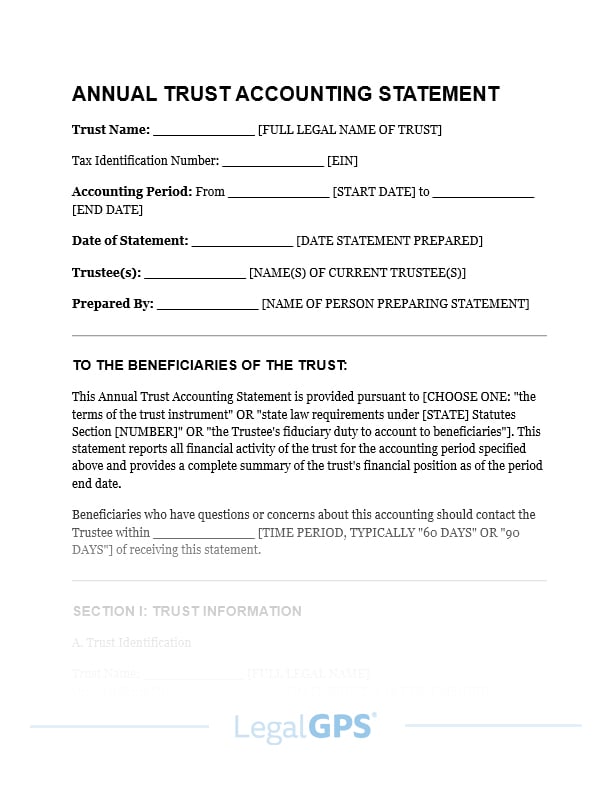
What Is the Annual Trust Accounting Statement?
An annual trust accounting statement is a detailed financial report that trustees prepare to show beneficiaries how trust assets were managed during a specific period. It lists beginning and ending assets, all income received, every expense paid, distributions made to beneficiaries, and changes in asset values. Think of it as a comprehensive financial scorecard for your stewardship.
This template follows the format expected by courts and attorneys. It separates income from principal (critical for many trusts), provides space for detailed asset listings, includes a trustee certification, and ends with a beneficiary approval section that releases you from liability. Whether you're managing a revocable living trust, testamentary trust, or irrevocable trust, this template handles all standard trust accounting needs.
| Premium Template Single-use Template |
Legal GPS Pro Unlimited Access, Best Value |
|
|
|
$35
|
$39/ month
|
| Buy Template | Explore Legal GPS Pro |
| Trusted by 1000+ businesses | |
Is This Annual Trust Accounting Statement Right for You?
You need this statement if you're:
- Serving as trustee of any trust
- Managing assets for beneficiaries
- Required by law to provide accountings
- Wanting to document your stewardship
- Seeking beneficiary approval to limit liability
- Preparing for court review or audit
You definitely need this statement if:
- Beneficiaries are questioning your management decisions
- You've made large distributions or sold major assets
- State law mandates annual trustee accountings
- You're resigning and need a final accounting
- Multiple beneficiaries have different interests in income and principal
Still unsure?
If you're managing someone else's money in a trust and want protection from future liability claims, you need regular written accountings that beneficiaries approve.
Why Thousands Trust Legal GPS Templates
Save Money. Attorneys charge $1,000-2,500 to prepare formal trust accountings. Our template costs $35 and you can reuse it annually.
Save Time. Download immediately and complete in 2-4 hours using your existing financial records. No waiting for attorney appointments.
Look Professional. Court-accepted format with proper income/principal separation, detailed asset listings, and all legally required disclosures.
Keeps You Out of Court. The Beneficiary Approval section releases you from liability when signed. The Income Statement properly allocates receipts and expenses. Detailed transaction records defend your decisions.
What's Inside This Template?
Beginning and Ending Asset Schedules
Comprehensive tables for listing cash accounts, investments, real estate, business interests, and personal property. Shows exactly what the trust held at the start and end of your accounting period with changes clearly identified.
Income and Principal Separation
Properly classifies receipts between income (interest, dividends, rent) and principal (asset sales, inheritances, contributions). Critical for trusts where different beneficiaries have rights to income versus principal.
Complete Disbursement Documentation
Tracks all distributions to beneficiaries, administrative expenses, property costs, and other payments. Documents your discretionary distribution decisions and justifies expense payments.
Investment Transaction Records
Space to record all asset purchases, sales, and exchanges during the period. Shows gains and losses realized, helping beneficiaries understand portfolio changes and performance.
Tax Information Summary
Documents tax returns filed, taxes paid, K-1 distributions to beneficiaries, and tax attributes carrying forward. Helps beneficiaries understand tax implications of trust income.
Trustee Certification and Beneficiary Approval
Formal certification by trustee that the accounting is accurate and complete. Beneficiary signature section that releases trustee from liability for the accounting period once signed.
| Premium Template Single-use Template |
Legal GPS Pro Unlimited Access, Best Value |
|
|
|
$35
|
$39/ month
|
| Buy Template | Explore Legal GPS Pro |
| Trusted by 1000+ businesses | |
Get Protected in 3 Simple Steps
Step 1: Secure Checkout. Complete your purchase and receive instant access to your annual trust accounting statement template.
Step 2: Instant Download. Download the template in Microsoft Word format. Customize for your trust's specific needs and reuse annually.
Step 3: Fill In the Highlighted Fields. Gather your financial records and follow the included guide to document assets, income, expenses, and distributions. Send to beneficiaries for review and approval.
Frequently Asked Questions
Can I use this template multiple times?
Yes. Purchase once and use it every year to prepare annual accountings. Modify it for multiple trusts if you serve as trustee for different families.
Is this contract legally binding?
Yes. When properly completed and signed by beneficiaries, this accounting provides legal protection from future liability claims for the accounting period covered.
How often should I prepare trust accountings?
Most states require annual accountings, though some allow every two or three years. Even if not legally required, annual accountings are best practice and protect you from liability.
What if beneficiaries refuse to sign the approval?
Unsigned accountings still document your stewardship but don't provide the same liability protection. If beneficiaries have legitimate concerns, address them. If disputes continue, you may need court approval through a formal judicial accounting.
Do I need to hire an accountant?
Not required, but recommended for complex trusts with business interests, multiple properties, or significant tax issues. For straightforward trusts with investment accounts and real estate, most trustees can complete this themselves.
What's the difference between income and principal?
Income includes interest, dividends, and rent that the trust earns. Principal is the underlying trust assets. Many trusts require income to be distributed to certain beneficiaries while preserving principal for others. Proper classification is essential.
| Premium Template Single-use Template |
Legal GPS Pro Unlimited Access, Best Value |
|
|
|
$35
|
$39/ month
|
| Buy Template | Explore Legal GPS Pro |
| Trusted by 1000+ businesses | |