

How to Buy Corporate Training That Actually Changes Employee Behavior
Companies spend over $366 billion annually on employee training, yet studies show that 70% of employees forget new information within 24 hours and...
10 min read
The fitness industry faces an unprecedented surge in legal challenges, with lawsuits against personal trainers, gyms, and fitness facilities increasing by 23% over the past three years. These cases range from injury claims exceeding $1 million to sexual misconduct allegations that destroy careers overnight.

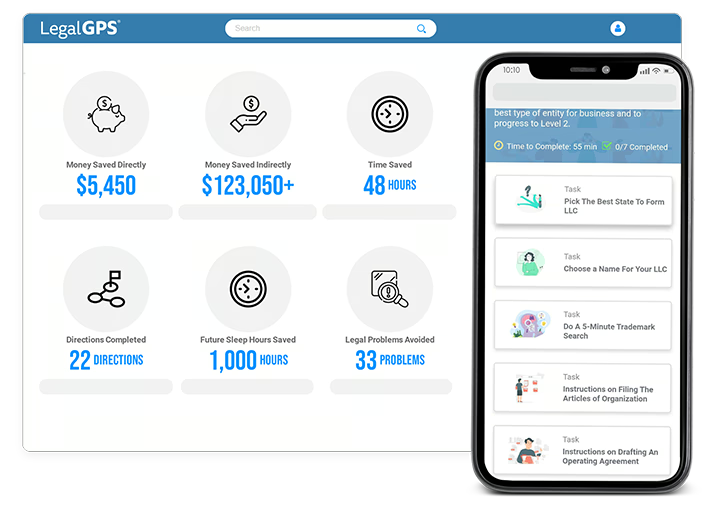
Legal GPS Pro
Protect your business with our complete legal subscription service, designed by top startup attorneys.
Personal trainers now operate in a legal minefield where a single mistake can trigger devastating lawsuits. The average settlement in fitness-related injury cases reaches $287,000, while harassment claims often exceed $500,000. Understanding these legal risks isn't just smart business practice—it's essential survival strategy for fitness professionals.
The consequences extend far beyond monetary damages. Legal battles typically last 18-24 months, draining resources and damaging professional reputations. Many trainers lack adequate legal protection, leaving them vulnerable to claims that could end their careers and personal financial security.

Personal Training Agreement defining services, scheduling, fees, waivers, and liability.
Trusted by 1,000+ businesses to safeguard their LLCs.
Injury-related negligence claims dominate fitness litigation, accounting for 67% of all cases filed against personal trainers and facilities. These lawsuits typically allege inadequate supervision, improper exercise prescription, or failure to recognize client limitations. Plaintiffs often seek damages for medical expenses, lost wages, and long-term disability costs.
Sexual harassment and misconduct allegations represent the most serious legal threat to fitness professionals. These cases frequently result in criminal charges alongside civil lawsuits, with settlements averaging $450,000. The fitness industry's physical nature and one-on-one training environments create unique vulnerability to such claims.
Contract disputes and refund issues generate significant litigation, particularly involving membership cancellations and personal training packages. Clients increasingly challenge automatic renewal clauses, cancellation policies, and billing practices. These disputes often escalate when facilities refuse refunds for services not yet provided.
Discrimination and accessibility violations under the Americans with Disabilities Act create growing legal exposure. Fitness facilities face lawsuits for inadequate accessibility accommodations, discriminatory policies, and failure to provide equal access to services and programs.
Sarah Martinez joined Elite CrossFit in Austin, Texas, eager to transform her fitness routine. During her third session, trainer Jake Thompson encouraged her to increase her deadlift weight despite her expressing discomfort. When Martinez attempted the 185-pound lift, she suffered severe spinal compression fractures requiring two surgeries.
The subsequent lawsuit revealed Thompson lacked proper certification for Olympic lifting instruction. Security footage showed him texting during Martinez's lift attempt, failing to spot her properly. Medical testimony confirmed the injury could have been prevented with appropriate supervision and gradual weight progression.
The jury awarded Martinez $2.8 million, including $800,000 in medical expenses, $1.2 million for lost earning capacity, and $800,000 in pain and suffering damages. Elite CrossFit's insurance policy covered only $1 million, forcing the facility into bankruptcy and destroying Thompson's career.
Scope of practice violations create severe legal liability when trainers exceed their professional qualifications. Personal trainers who provide nutritional counseling, injury diagnosis, or medical advice face lawsuits for practicing without proper licensing. These violations often void insurance coverage, leaving trainers personally liable for damages.
Inadequate supervision and spotting failures generate the majority of trainer liability cases. Courts hold trainers responsible for maintaining constant vigilance during exercises, especially those involving heavy weights or complex movements. A momentary lapse in attention can result in catastrophic client injuries and massive legal judgments.
Equipment safety responsibilities extend beyond proper usage instruction to include regular maintenance verification and hazard identification. Trainers who fail to inspect equipment before client use face negligence claims when mechanical failures cause injuries. This duty includes ensuring clients understand emergency stop procedures and safety protocols.
Emergency response obligations require trainers to maintain current CPR/AED certification and implement immediate response protocols during medical emergencies. Delayed or inadequate emergency care significantly increases legal liability and damages in injury cases. Many courts impose heightened duty of care standards on fitness professionals due to their specialized training.
Professional liability insurance represents the most critical legal protection for personal trainers, but standard policies often contain dangerous gaps. Ensure your coverage includes abuse and molestation protection, which many basic policies exclude. This coverage typically costs an additional $200-300 annually but protects against the most financially devastating claims.
General liability insurance should carry minimum limits of $2 million per occurrence, with aggregate coverage of $4 million annually. Many trainers mistakenly assume $1 million coverage provides adequate protection, but serious injury cases frequently exceed these limits. Consider umbrella policies for additional protection if you train high-net-worth clients.
Verify that your policy covers independent contractor arrangements if you work at multiple facilities or provide in-home training services. Some insurers exclude coverage when trainers operate under facility contracts rather than direct employment relationships.
Informed consent requirements mandate that fitness professionals fully disclose exercise risks, trainer qualifications, and facility policies before beginning training relationships. Clients have the right to understand potential injury risks, alternative exercise options, and their responsibility for honest health disclosure. Inadequate informed consent processes create significant liability exposure.
Privacy and safety expectations include protection from sexual harassment, unwanted physical contact, and inappropriate personal relationships. Clients can pursue legal action when trainers violate professional boundaries or create hostile training environments. These protections extend to locker rooms, private training areas, and virtual training sessions.
Contract terms and cancellation rights vary significantly by state, but clients generally retain rights to cancel services within specified timeframes and receive refunds for unused portions. Many fitness contracts contain unfair terms that courts refuse to enforce, including excessive cancellation fees and automatic renewal clauses lacking proper notice.
Reporting misconduct procedures require facilities to maintain clear channels for client complaints and implement prompt investigation protocols. Clients who face retaliation for reporting inappropriate trainer behavior can pursue additional legal claims beyond the original misconduct allegations.
Personal trainer Michael Rodriguez built a successful practice at Premium Fitness in Denver, training dozens of female clients over five years. His reputation for results attracted high-profile clients, including local news anchor Jennifer Walsh. However, Rodriguez began sending inappropriate text messages to Walsh, making sexual comments during sessions, and attempting to initiate personal relationships.
When Walsh complained to facility management, they initially dismissed her concerns and suggested she simply switch trainers. Rodriguez escalated his behavior, following Walsh to her car and showing up at her workplace uninvited. Walsh documented each incident and filed complaints with both facility management and local police.
The lawsuit against both Rodriguez and Premium Fitness revealed a pattern of similar complaints from at least six other female clients. The facility had received warnings about Rodriguez's behavior but failed to investigate or take corrective action. They had no written policies addressing trainer-client boundaries or harassment reporting procedures.
Walsh's attorney secured a $450,000 settlement, with Rodriguez personally liable for $150,000 and Premium Fitness covering the remainder. The facility implemented comprehensive harassment policies and terminated Rodriguez, who lost his professional certifications and faced criminal stalking charges.
Proper waiver construction requires specific legal language that clearly identifies assumed risks while avoiding overly broad liability releases. Effective waivers must be conspicuous, easily readable, and contain explicit warnings about potential injuries. Courts frequently invalidate waivers that use confusing language or attempt to waive gross negligence claims.
Medical clearance requirements create essential legal protection by documenting client health status and physician approval for exercise participation. Trainers should require medical clearance for clients over age 50, those with chronic health conditions, or individuals returning from injury. This documentation helps establish that injuries weren't caused by pre-existing conditions.
Incident reporting procedures must capture detailed information immediately following any injury or emergency. Effective reports include witness statements, photographic documentation, and medical response details. Delayed or incomplete incident reports severely compromise legal defenses and insurance claim processing.
Record keeping best practices include maintaining client files for minimum seven-year periods, storing documents in secure locations, and creating backup copies of critical information. Digital records should include encryption protection and regular backup procedures to prevent data loss during litigation.
Powerhouse Gym in Minneapolis believed their liability waiver provided bulletproof protection against injury lawsuits. The waiver stated that members "assume all risks" and "waive all claims" against the facility. When member Robert Chen suffered a severe head injury from a falling weight plate, Powerhouse confidently relied on their waiver to dismiss the lawsuit.
The court examination revealed multiple fatal flaws in the waiver's construction. The document used 8-point font that was difficult to read, buried critical waiver language in the middle of a long membership agreement, and failed to specifically identify weight training risks. Most importantly, the waiver attempted to release the gym from gross negligence claims.
Investigation showed that Powerhouse staff knew about loose weight plate collars for three weeks but failed to repair or remove the equipment. Security footage revealed multiple near-misses with the same equipment before Chen's injury. The court ruled that attempting to waive gross negligence violated public policy and invalidated the entire waiver.
Chen's lawsuit proceeded to trial, resulting in a $1.8 million verdict against Powerhouse Gym. The facility's insurance company denied coverage due to the gross negligence finding, forcing Powerhouse into bankruptcy. A properly constructed waiver and prompt equipment maintenance could have prevented this devastating outcome.
Professional certification requirements extend beyond initial credentials to include ongoing education and specialty training for specific exercise modalities. Trainers who instruct high-risk activities like Olympic lifting, martial arts, or advanced gymnastics need specialized certifications. Courts increasingly scrutinize trainer qualifications when evaluating negligence claims.
Continuing education obligations help maintain current knowledge of exercise science, safety protocols, and legal requirements. Most certifying organizations require 15-20 continuing education credits annually, but smart trainers exceed these minimums to stay current with industry developments. Documentation of additional training strengthens legal defenses in injury cases.
Client screening and assessment protocols should include comprehensive health questionnaires, fitness testing, and goal-setting discussions before beginning exercise programs. Proper screening identifies contraindications, establishes baseline fitness levels, and creates realistic expectation frameworks. These assessments provide crucial legal documentation of trainer due diligence.
Facility safety standards require regular equipment inspections, environmental hazard assessments, and emergency preparedness protocols. Trainers working in facilities should verify that management maintains proper safety standards and report hazardous conditions immediately. Independent trainers must establish their own safety protocols for equipment and training environments.
Effective client agreements extend far beyond liability waivers to create comprehensive legal frameworks for trainer-client relationships. Include detailed sections covering communication policies, cancellation procedures, payment terms, and professional boundary expectations. Specify that training relationships are strictly professional and prohibit personal relationships or social media connections.
Address emergency situations by requiring clients to provide emergency contact information, medical history details, and physician contact information. Include specific language about trainer authority to modify exercises, discontinue sessions due to safety concerns, and seek emergency medical assistance when necessary. This documentation proves trainer priority on safety over revenue.
Create separate agreements for different service types, including group training, nutritional guidance, and virtual sessions. Each service category involves different risks and legal considerations that generic agreements cannot adequately address. Review and update agreements annually to reflect changes in law, insurance requirements, and industry standards.
Immediate response procedures can significantly impact lawsuit outcomes and settlement negotiations. Document the incident thoroughly, preserve all relevant evidence, and avoid admitting fault or discussing case details with anyone except legal counsel. Contact your insurance carrier within 24 hours to begin the claims process and obtain coverage confirmation.
Insurance notification requirements include providing complete incident documentation, witness contact information, and copies of all relevant client records. Delayed notification can void coverage or create coverage disputes during settlement negotiations. Maintain detailed communication logs with insurance representatives and legal counsel throughout the process.
Legal representation considerations should prioritize attorneys with specific fitness industry experience and successful track records defending similar cases. Insurance-provided counsel may have conflicts of interest or limited experience with fitness-specific issues. Consider retaining personal counsel for coverage disputes or high-stakes cases.
Settlement vs. litigation decisions involve complex calculations of legal costs, reputation damage, and financial exposure. Many cases settle for amounts less than trial defense costs, making early settlement attractive despite merit concerns. However, settlements often include admission of wrongdoing that can damage professional reputation and future insurance coverage.
Personal trainer Lisa Park discovered that former client Amanda Foster had posted scathing online reviews accusing Park of incompetence and unprofessional behavior. The reviews appeared on Google, Yelp, and Facebook, claiming Park injured Foster through "dangerous training methods" and "ignored obvious signs of distress during sessions."
Park's business suffered immediate damage, losing six clients within two weeks and seeing new client inquiries drop by 75%. Believing the reviews contained false statements, Park contacted Foster demanding removal of the posts. When Foster refused, Park posted her own responses on social media, calling Foster a "vindictive liar" and sharing details about Foster's personal life and training struggles.
Foster's attorney filed a defamation lawsuit against Park, claiming the social media responses contained false and damaging statements about Foster's character and personal life. The lawsuit demanded $300,000 in damages for harm to Foster's reputation and emotional distress caused by Park's public attacks.
Park's professional liability insurance excluded defamation coverage, leaving her personally responsible for legal defense costs. After spending $45,000 on attorney fees and facing a potentially larger judgment, Park settled the case for $125,000. The settlement required Park to issue a public apology and remove all social media posts about Foster.
State licensing requirements vary dramatically across jurisdictions, with some states requiring formal licensure for personal trainers while others rely on voluntary certification systems. Trainers must understand their state's specific requirements and ensure compliance with all applicable regulations. Practicing without required licensure can result in criminal charges and civil liability.
Health department regulations often govern fitness facilities and may impact independent trainers who provide services in commercial or residential settings. These regulations typically address sanitation requirements, air quality standards, and equipment safety protocols. Violations can result in facility closures and personal liability for trainers.
ADA compliance obligations require fitness facilities and services to provide reasonable accommodations for individuals with disabilities. This includes physical accessibility, program modifications, and auxiliary aid provisions. Trainers working with disabled clients need specific training to provide appropriate accommodations without compromising safety.
Data privacy considerations have become increasingly important as fitness professionals collect health information, payment data, and personal contact details. State and federal privacy laws may apply to fitness businesses, requiring specific data protection protocols and breach notification procedures.
Create a comprehensive annual review process to ensure ongoing legal compliance and risk management. Schedule quarterly insurance policy reviews to verify coverage adequacy and identify any gaps in protection. Insurance needs change as businesses grow, so regular reviews prevent dangerous coverage shortfalls.
Conduct annual facility safety audits using professional safety consultants or experienced facility managers. Document all safety improvements and maintain records of compliance with manufacturer maintenance requirements for equipment. These records provide crucial evidence of due diligence during litigation.
Review and update all client agreements, waivers, and policies annually to reflect changes in law, insurance requirements, and industry standards. State laws regarding liability waivers and contract terms change frequently, making regular legal review essential for maintaining enforceability.
Contract template essentials should address every aspect of the trainer-client relationship, from payment terms to emergency procedures. Effective templates include specific language about scope of services, client responsibilities, and termination procedures. Working with legal counsel to create customized templates provides better protection than generic forms.
Professional liability insurance represents the foundation of trainer legal protection, but coverage selection requires careful attention to policy details and exclusions. Compare policies from multiple carriers and consider coverage limits, deductible amounts, and specific exclusions that might apply to your practice.
Legal review protocols should include regular consultation with qualified attorneys familiar with fitness industry issues. Establish relationships with legal counsel before problems arise to ensure rapid response when issues develop. Many attorneys offer annual retainer arrangements that provide ongoing access to legal advice.
Emergency action plans must address medical emergencies, equipment failures, and facility evacuations. Train all staff members on emergency procedures and conduct regular drills to ensure effective implementation. Document emergency response training and maintain current certification for all required emergency skills.
Fitness industry lawsuits continue increasing in frequency and severity, making legal protection essential for both trainers and clients. Professional liability insurance provides crucial financial protection, but comprehensive legal strategies require proper documentation, client agreements, and emergency protocols.
Understanding your legal obligations and client rights creates the foundation for successful risk management. Regular legal compliance reviews, ongoing education, and professional consultation help identify and address potential issues before they become devastating lawsuits.
The investment in proper legal protection pales compared to the potential cost of a single lawsuit. Legal GPS offers comprehensive contract templates and legal guidance specifically designed for fitness professionals, providing affordable access to the legal protection your business needs.
Ready to protect your fitness business from costly lawsuits? Legal GPS Pro subscribers receive access to customizable trainer agreements, liability waivers, and emergency response protocols designed specifically for the fitness industry. Don't wait for a lawsuit to discover your legal vulnerabilities – start building comprehensive protection today.
Legal GPS Pro
Protect your business with our complete legal subscription service, designed by top startup attorneys.
|
Premium Template
Single-use Template |
Legal GPS Pro
Unlimited Access, Best Value |
|
|
| Choose Template | Learn More |
| Trusted by 1000+ businesses | |

Companies spend over $366 billion annually on employee training, yet studies show that 70% of employees forget new information within 24 hours and...

American companies spend over $366 billion annually on employee training programs, yet most business owners struggle to demonstrate meaningful return...

Mental health practitioners face unique liability risks that can devastate both their practice and personal finances. Unlike other healthcare...